Thursday, September 15, 2011

A Woman's Beauty

Before our office moved from Century City, I went to the Annenberg Space for Photography on my lunch break to see the Beauty Culture exhibit that features photographs of movie stars and models by world famous art and fashion photographers such as Tyen of the House of Dior and Albert Watson whose celebrity portraits have appeared on more than 100 covers of Vogue Magazine.

The purpose of the exhibit, which runs through November and features a must see documentary short, is to show the power of the still image in shaping our cultural ideals of feminine beauty and a woman's sense of self.

Take your friends and family, sons and daughters as the exhibit sparks a lively discussion about our relentless pursuit of beauty and how power co-opts our sense of self for its own end.  You need only take a look at the Wall Street traded multi-billion dollar corporations that surround high fashion photography today to see that they are always trying to expand deeper and deeper into your body and psyche -- and for what purpose?  The answer is simple.   Just ask yourself, "Who profits?"

But you don't have to buy into it. One of the women featured in the exhibit is my personal heroine, Sophia Loren. She's an icon of feminine beauty for sure, but even the exhibitioners don't quite know where to put her. When you go you'll see what I mean. She stands out from the other beauties as having an undefinable, uncategorizable, incongruent "something".

In my own attempt to define what beauty and "the red coat" means to me, I came across her book Women & Beauty.  I never followed Ms. Loren's career but the book made me a huge fan.  In it she gives tips on wardrobe, hair, cosmetics, exercise, dieting and though these are important, she says, the essence of a woman's beauty is something much more.

Looking back on her career as an actress, she tells a story about working with George Cukor. Cukor was considered a “woman’s director” who had an eye for beauty and a special instinct for developing a woman’s potential. To Loren's great surprise, he did not spend time fussing with makeup and costume. One day, in the course of explaining how a character should emphasize her attractiveness, Loren recalls that Cukor said something that she has never forgotten:
"Beauty without self-confidence is less attractive than ugliness with self-confidence.   
If you are confident, you are beautiful.”  
Loren, elaborates.
"If you turn to your friends or even to women who appear in the media, you will see that the beautiful ones, those who catch your eye and make you delight in them and perhaps envy them, are the ones who believe that they are beautiful.  Somehow they have discovered that they are beautiful, and they radiate the pleasure of their discovery, even though their features or their figure or their makeup are not perfect.  You recognize immediately their confidence in their own appearance.  Indeed, I am convinced that nothing makes a woman more beautiful than the belief that she is so.”
What would happen in the world right now if women everywhere believed that they were beautiful and radiated the pleasure of that discovery?

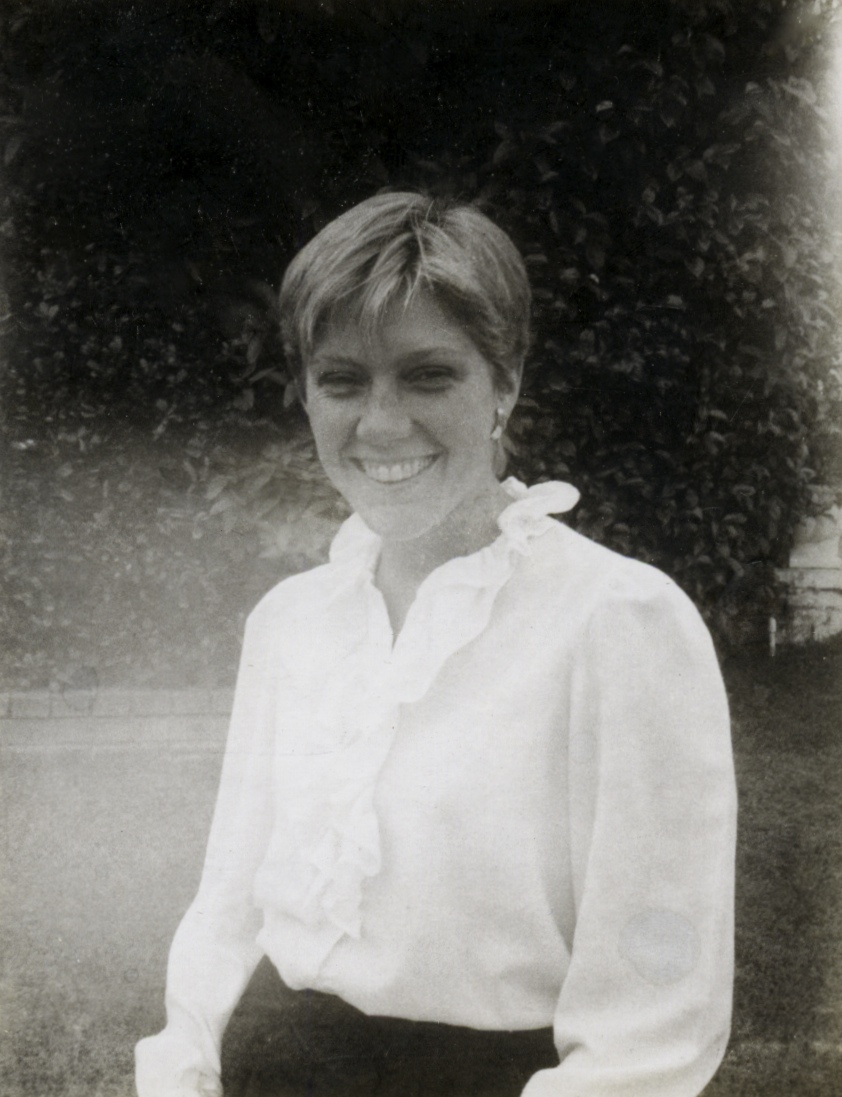
For my picture, I chose a photograph of me when I didn't know how beautiful I was. Do you have one like that too?


Thursday, September 8, 2011

The Art of Haute Couture

I wanted to take a trip up to San Francisco this summer to see the Balenciaga and Spain exhibit at the de Young museum before it closed, but I never did. It was just too hard to find the time to make the trip so instead for about forty dollars I purchased the book by Hamish Bowles that the Fine Arts Museums of San Francisco and Rizzoli's published to commemorate the exhibit.  The book traces the influence of the Spanish masters -- from Zurbaran, Velazquez and Goya to Picasso and Miro -- on Balenciaga's designs.

I am thinking of this tonight because one of the assignments for our mastermind meeting this month is to bring in something that you bought that you considered expensive or unnecessary at the time but are glad you splurged on it.  There was a time when buying a book like that, much less taking a flight just to see an art exhibit, was a hard decision for me - even if it could be considered research for my book.  I didn't have enough confidence in myself or my work to justify the expense.  Or perhaps it was just extremely low self worth.  At the time, I envied other artists who invested in themselves, spent money renting out an office to work in, purchased a proper writing chair to sit in, bought gorgeous picture books that helped to stimulate their creativity.  What was wrong with me that I couldn't do that too?

There was one book that I really wanted called "The Art of Haute Couture" but just couldn't afford.  I saw it at the Barnes and Noble on the Third Street Promenade in Santa Monica while I was enjoying a rare night out with my girlfriends.  It was 1995 and the book cost 75 dollars.  I had just begun to write about Marla Piper and the fabulous red coat that she would sew and the book spoke to me.  It was beautifully photographed by Victor Skrebneski with breathtaking closeups that revealed the way couturiers work with line, texture, drape, volume and ornament to create illusion and drama.  I had to have it, but there was no way to assess how or when or if the purchase would ever pay off.

How do you know that the thing that you are working on will be hugely successful one day?  That's the question that was posed in our mastermind.

Well I did buy the book -- thanks to the urging of my friend, Barbara -- and for my picture tonight, I chose my favorite photograph in it of a design which I realized only tonight is by the very same Balenciaga.  But the reason I chose it is not because it's a Balenciaga.  I chose it because one of my fellow masterminders mentioned that it reminded her of The Red Coat Portal that I had painted last year, perhaps unwittingly after the couturier.  Or perhaps Balenciaga and I both drew our inspiration from the greatest of all masters, mother nature.

Friday, September 2, 2011

Mindful of Thoughts

I know that my subconscious mind reacts according to what I think each day, so I choose these thoughts:

Success.  I was born to succeed.

Plan. I have a definite written purpose and plan that brings me freedom, creativity and happiness.

Time.  Time and money expand to meet my dream.

The Status Quo that I Am Changing.  Women see themselves through the eyes of others and do not recognize their worth.

The Idea That I Am Spreading.  By remembering our women’s arts of friendship, sewing, birthing, rearing, mourning, weaving we reclaim parts of ourselves that bring us closer to one another and to our nature.

The Picture of the Future that I Am Painting.  We honor the natural world.

The Red Coat Promise.  Bestowing certain charms not offered by other fineries.

Faith.  I have faith in all things good and live in joyous expectancy of the best.  Others believe in me because I believe in them and in myself.

Chasms.  Though I may sometimes feel foolish and afraid, I remember that I bear chasms, heavens, eternities within me and can travel unopposed.
Help.  Invisible counselors speak to me through the natural world, which I cultivate by being observant and listening.

Give Thanks.  I am thankful for my life, for the endless possibilities for creation, for wholeness, for joy, for deep meaning and contentment.


Tuesday, August 23, 2011

Do You Need This Hedge?

The company I work for moved offices over the weekend and folks had to jettison a lot of their stuff because we were going to a smaller (more posh?) space in Beverly Hills.  I had a cactus that had grown so tall and skinny and lopsided I had to prop it up against the window sill to keep it from falling over.  There was no way I was taking it with me.

The cactus towered precariously over the two other much smaller cacti in its pot that for some reason had never "progressed" the way it had.  The three of them looked like a sorry lot.  Surely no one else would take them, but I couldn't bring myself to throw them out.  Better let someone else do the dirty work.  So I shined up the pot, affixed a yellow post-it note with the words: "Poor little cacti - orphaned - lost their home" and carried it (very carefully!) into the lunchroom.  I set it on one of the tables, waited to make sure it wouldn't fall over, and then bid it a wistful goodbye.  A few hours later, I went in there to dump some trash and was astonished to find that it was gone!

I was telling this story to one of my colleagues, thinking that somebody must have thrown them out, and he told me, on the contrary, he'd seen the person who took them -- and assured me they'd found a loving home.  I couldn't imagine who would become attached to such an ungainly arrangement and then go through all the trouble of moving it! 

Was it possible that my little note about orphans (we were all feeling a little uprooted that day) may have bestowed a certain charm not offered by other plants?  I recalled one of my favorite posts by marketing guru Seth Godin about how the best brands, the ones that make a connection with the public, are mythic -- that is, they tell stories that people connect with on a spiritual level.

I didn't happen to take a picture of the three cacti before I abandoned them (would you have!), but I do like to take photos of misfit plants, and thought I'd share this photo of one of my favorite hedges in Century City.  It's located across the street from our old office and always made me laugh and wonder what it said about our community. 

Next time, if you're unsure if you've got something worth keeping, ask yourself does it have a mythology that helps you live?


Tuesday, August 16, 2011

The Choice You Make


In dramatic writing, you want to establish the basic need or object of desire in your main character and then set up obstacles for achieving it – the more obstacles the better! The formula they teach you in film school is the same: boy meets girl, boy gets girl (Act One), boy loses girl (Act Two), boy gets girl back (Act Three).  The key is to make things worse as the story progresses – not out of mean spiritedness but because how your character deals with problems reveals her character. 

You know.  When a person’s back is up against the wall that's when you find out who they really are.   

What’s the worst that could happen?  That’s the crisis in your play.  The forces of opposition can no longer avoid collision and the worst thing your main character could have imagined comes true – so what does she do? That’s the rest of your play!

My playwriting teacher said it was Oedipus’ character that made him gouge out his eyes when he realized that he had murdered his father and slept with his mother.  Other characters might have just skipped town.

I was thinking about this when I found myself in my own crisis.  I’d been working full guns for six months on the book, writing before work and for several hours each day on the weekends and trying to paint at nights, when it got busy again at work and I started to become exhausted and depressed.  The company was moving offices too, so I had to give up taking the bus, which is when I do all my reading, and swimming on my lunchbreaks, which is the thing I do to keep my energy and spirits up. 

I was getting pressed on all sides, and started to feel my dream slipping away... 

At first, I felt shame for all my failures.  Then panic as I went round and around my schedule and found no breaks.  Then I got sick.  Then, I blamed Jack for not rescuing me.  Then I remembered a strategy that our teacher had taught us in playwriting class.

You set a timer and for 5 minutes you write what happens from the crisis point to the end of your play.  Write whatever comes to mind in as much detail as you can.  Then you go back to the crisis point and somebody (say your main character) makes a different choice.  For 5 minutes write what happens from that choice to the end of your play.  Do that 5 times, so you have 5 different endings.  Then choose one – and that’s how your play ends!

Do that for your life and then, given all the different scenarios, ask yourself what is the choice you will make?

p.s. I chose 6:00am M-F at the Culver Plunge! 

Wednesday, July 6, 2011

Knight of Faith

Why is it in the spirit world anything is possible but in life we must pass the same old traces? 

Jack and I just finished watching Ingmar Bergman's The Seventh Seal and I asked him why it was one of his favorite films.  He said because it deals with the deepest questions facing human beings -- and still is very funny. 

I'm reading the screenplay to Fanny and Alexander, and notice that in both films, Bergman juxtaposes the choices people make between cruelty and kindness.  In Fanny and Alexander it is the choice that is made in a marriage and in The Seventh Seal it is the choice that one makes during a time of extreme crisis, in this case the period of profound social, economic and religious upheaval brought on in 14th Century Europe by the Plague.  The Knight, played by Max Von Sydow, and his Squire return from the Crusades to find the world turned upside down.  Reacting in terror to the Black Death that has taken nearly half the population, the townsfolk have gone out of their minds, torturing each other and flagellating themselves. 

Why do some people choose cruelty -- and others kindness? 


Why is it in the spirit world anything is possible but in life we must pass the same old traces?  

Jack and I pondered these questions.  Yes, I thought, I am afraid to die but why must it define me? When the Knight witnesses these displays of cruelty, feels his own fear, he replies, "My body is afraid, but I am not."   

I repeated that line to Jack.  "That is what I shall say."  "Then you have faith?" he relied.  I was surprised.  "I have been fooled before," I said with a sly smile.  "What do you mean?" he asked.  I told him how many years ago when I was pregnant I had thought the birth of my child would transform me, but the experience was something very different.  I forewent pain killers in order to be completely present but I had no idea how excruciating it would be.  The labor which lasted for 36 hours was unabated pain until at last, in exhaustion, I submitted to cesarean.  

And still.  I was transformed.  

"Perhaps it was because of the pain," I said to Jack.  It was for that reason, I told him, I wasn't sure I wanted to be sedated in the last moments before death.  Jack related what he'd read in a biography of Montaigne.  He'd had a nearly fatal fall from a horse and witnesses reported he was in agonizing pain, yet Montaigne's own recollection of the experience was very different.  He said it was peaceful.


I told Jack that was probably because Montaigne was in shock as the consciousness began to leave the body.  And then, all of a sudden, as we were discussing this, my mind made a leap.  My consciousness lighted on the possibility that things were not as they appeared at all.  I was staring at the bookcase, I remember.  The lamp was on and Jack was sitting there on the couch beside me.  "Perhaps all of this," I said waving my hands to indicate the world around us as we were sitting there experiencing it "...perhaps all of this is an illusion."  What if it didn't matter?  Or, more precisely, what if we weren't bound by it?  Then what was true?  I tried to focus my mind.  What if we bore, as Bergman has his hero in Fanny and Alexander say,  "chasms, heavens, eternities" within us? 

Though I seem small and insignificant in the face of this,
I bear chasms, heavens, eternities within me.
I carry my lantern in the darkness;
I make the movements;
And though my body may be afraid,
I am not.

If I could see this, remember this, what great things would I accomplish?   


Saturday, June 25, 2011

Explores A Question

I started a playwriting course last Tuesday at UCLA taught by Leon Martell and the first assignment made me light headed with a kind of nerdy anticipatory fever!  Leon asked us to bring in three germs for a play: a situation, a title, an image.  He said a play begins with a question and gave as an example his award winning play, "Bea[u]tiful in the Extreme," which explores the question why Lewis (of Lewis and Clark) shot himself after he returned from his historic expedition.  

In my favorite book on how to write a novel, "The Art of the Novel," Milan Kundera ("Unbearable Lightness of Being") says exactly the same thing!  A novel explores a question.  In fact, Kundera says, the history of the novel is not the sum of what was written but the "sequence of discoveries" along the way:
"In its own way, through its own logic, the novel discovered the various dimensions of existence one by one: with Cervantes and his contemporaries, it inquires into the nature of adventure; with Richardson, it begins to examine 'what happens inside,' to unmask the secret life of the feelings; with Balzac, it discovers man's rootedness in history; with Flaubert, it explores the terra previously incognita of the everyday; with Tolstoy, it focuses on the intrusion of the irrational into human behavior and decisions. It probes time: the elusive past with Proust, the elusive present with Joyce. With Thomas Mann, it examines the role of the myths from the remote past that control our present actions. Et cetera, et cetera."
How exciting!  Not only do we write with a question in mind, our questions form the history of the artform itself!  And it made me wonder.  What are the questions people are asking these days in the books and plays and videogames they are writing?  And where does mine fit in?

It made me think about the question behind my book.  There are many questions, actually, because over these 15 years I've used my book to learn many things.  But the question that is central to the main character is this: "What is the 'Thing' I am constantly searching for but never find?"  And the form of my book?  What if there were a form, the writing of which could create consciousness in the person writing it?  That is the form that I would pick!

So what is your question?