Wednesday, October 12, 2011

The House You Must Go Into


Fifteen years ago, when I started to write The Red Coat, I had a dream, which I wrote down in my journal:
"It is some kind of complex of buildings.  It is dark.  The streets are empty.  Something is going on at one end of it.  I set out toward it.  I find somebody.  I ask them about the complex.  I know I have to go straight for that building (the answer lies there) but why? Why? What is there?  Then I see Celeste, the serene woman at the pool who reminds me of the Mona Lisa, but instead of her usual self she is RAGING.  I hold her at a distance from me and we start to rotate in the air.  She is ranting and raging (about something).  She is mad.  She is yelling AT ME and I am so utterly terrified, so frightened, I throw her over the counter and she is knocked out by something she hits over there."
In the journal, I describe how I wake from the dream shaking with fear, unable to get enough air to breathe, shielding my head with my pillow.  Why am I so afraid? I wonder. Why Celeste? and why now raging?  I try to analyze the dream.  I remember someone saying that characters in a dream are different sides of your own personality and I realize that Celeste is the good girl, me, who is raging because of what I’ve done to her, repressed her, her true nature. 
What is her true nature? and what is the house I know I must go into?
I flip a few pages forward and find another entry, written around that same time, a period of unemployment: 
"I called my sister to gather some concrete reasons why, why, why plagued by the wish, constantly, the unhappy need to express myself for my whole adult life... and still, despite all my efforts, all my trying, am no further along than when I started, worse in fact: no work, no income, no food...while others more ? succeed…"
I had been laid off after I came back from my maternity leave and had lost my footing in the world, not to mention my income.  I finally had some time to write, but I was blocked, and terrified about money.  It was during that time, right after the birth of my son, that I began to withdraw from projects and people and associations I was taken up with and started on what would prove to be a long descent into and through the deep layers of my psyche to find, I now see in retrospect, answers to those questions.
The response my sister had to my call would provide a roadmap, whether or not at that time I could consciously and conscientiously adopt it:
"Marianne encouraged me to accept myself and all the shameful emotions that I possess and to write about these true things.  She encouraged me to accept myself, all of me, even the bad stuff and to be who I am...not looking for, not requiring other people's approval." 
Accept myself, all of me, and write about these true things.
That is why Inanna and her story resonate with me.  After reading my last post, Jack commented that those virtues of hers aren't all nice.  I agreed but said that the ability to take action in the world means that one must have the power to be both bad and good, to be repugnant as well as pleasing, to be cold as well as caring, to make war as well as peace.  Too often we women deny essential parts of ourselves -- we make nice, we hide, we avoid, we push our power down below and out of sight, we silence ourselves -- to be accepted and loved by others. 
But at what price? 
For my picture I chose a collage I made several years ago that I call Underwater 2.  It is the uncertain, sometimes abysmal place of the unconscious world, of fear and depth and murk, but also the place where lies the buried treasure.  For me it is that complex of buildings I had to go into in my dream.  It is the house of my writing.
What is the house in your dream?

Friday, September 30, 2011

Queen of Heaven and Earth

On my quest for an image of a woman that would serve as both mascot and role model on my journey to wholeness and self-loving, I considered the goddesses of ancient Greece.

There was one goddess who ruled over wisdom (Athena), another love (Aphrodite), another chastity (Artemis), and another the hearth and marriage (Hera) -- yet the choices felt unsatisfying to me.  Why were the goddesses (and gods) of ancient Greece so fragmented, so compartmentalized?  You know, one was good to have at your side in an argument, another when you went on a date (or were looking for one!), another when you took up housekeeping and another when you needed to retrieve your childlike divinity -- but not one of them was the picture of a complete woman!

Here I was in the golden age of our Western Civilization, and not one fully-formed deity!  (What was the significance of that, I wondered.)

And so I traveled father and farther back in time looking for "her" until I came to the cradle of civilization, the land of the ancient Sumerians.  Here, in the Fertile Crescent, I found an image carved in stone, of a woman holding a sheaf of grain in her hand and a quiver of arrows at her back who had long curling hair tumbling down her shoulders, a crown of horns upon her head, bright eyes -- and a smile on her face.

She made me laugh!  Who was this woman who had such a sweet smile but was ready to fight?

The image, from 2400 BC, was much older than the other stone carvings from the Bronze Age that caught my attention.  Nevertheless, I was immediately struck by it's freshness and accessibility, attributable no doubt to her amiable countenance.  She seemed like someone I could get to know and like.  I had to find out who she was!

I learned that she was Inanna, Queen of Heaven and Earth.  Unlike the goddesses in the Golden Age of Greece,  Inanna possessed all the virtues.  She was a whole person.  The ancient Sumerian tablets were translated and retold by Diane Wolkstein and Samuel Noah Kramer in their book Inanna: Queen of Heaven and Earth.  In it, they tell how Inanna got all the virtues.  The story goes like this:

Inanna went to visit her father, Enki, who was a great god and knew all things, and after paying her respects he invited her to drink with him at the Table of Heaven.  Inanna accepted and she sat down and they began to drink beer together.  They drank more and more beer until, swaying with drink, Enki toasted Inanna:
In the name of my power! In the name of my holy shrine!
To my daughter Inanna I shall give the high priesthood!
Godship! The noble, enduring crown! The throne of kingship!
Inanna replied: I take them!
Through the driving mists of his drunken stupor, Enki gave Inanna all of his me (virtues) and each one she took: the virtue of war, of incantation, of truth, of dagger and sword, of the black garment, of the colorful garment, of fear, of lovemaking, of forthright speech, of slanderous speech, of song, of power, of lamentation, of the perceptive ear, of the power of attention, of treachery, of straightforwardness, of kindness, of deceit, and so on, until Enki had no virtue left and he fell fast asleep.  Inanna fell sleep too and when she woke she loaded up her boat with all of the virtues that now belonged to her and she sailed home.  When Enki woke, still reeling of drink, he asked: "Where are all my virtues?" and his assistant explained to him what had happened.  Enki sent wave upon wave of sea monsters after her but Inanna held her father to his word and with the help of her secretary she drove back the monsters and delivered the virtues to her people.

What virtues are yours?  Take them!


Wednesday, September 21, 2011

Crown of Doves and Bull's Horns

I studied political philosophy in college and never forgot Niccolo Machiavelli's advice in The Prince:
"Men nearly always follow the tracks made by others and proceed in their affairs by imitation, even though they cannot entirely keep to the tracks of others or emulate the prowess of their models. So a prudent man should always follow in the footsteps of great men and imitate those who have been outstanding. If his own prowess fails to compare with theirs, at least it has an air of greatness about it."
My professor raved about this passage because it provided a roadmap for "ordinary" people like us to follow -- but it always bugged me.  Why not say imitate great -- people?  I mean, weren't there great women in history too?  The truth is, I didn't know about many of them.  All of the philosophers we read -- from Plato, Aristotle, Kant, Hegel, Nietzsche, Heidegger and Kierkegaard, down to de Tocqueville and the Founding Fathers -- were men.

Like many women who feel invisible to men and struggle with feelings of low self worth and are unsure of themselves, I kept quiet about it.  But later on in life, on my journey to wholeness and self-loving, I began to ask myself, is there an excellence of women?  Are we so different, and, if so, what would it mean to be a great -- woman?  Since I am a visual learner, I began to look for images that inspired me.  How did I want to look and feel?  And who would be my role model?

Like most women, I turned to what was at hand: fashion magazines.  While the women were beautiful, I couldn't find any that inspired my imagination.  So I turned to art books, and found myself drawn to some of the earliest images, from the Palaeolithic era and Bronze Age, of the female figure in a "gesture" of epiphany.  Unlike the demure images of women that I found in magazines for modern women and much more recent art, this ancient gesture of the raised arms signifying a sudden, intuitive perception or insight into the reality or essence of a thing, really spoke to me.

What image speaks to you?

For my picture, I chose two images from Bronze Age Crete that I found in a book by Anne Baring and Jules Cashford called The Myth of The Goddess: Evolution of An Image.  The figure above is a Mycenaean seal with goddess and worshipers from 1500 BC.  The one below is a goddess with a crown of doves and bull's horns from 1400-1200 BC.
 

Thursday, September 15, 2011

A Woman's Beauty

Before our office moved from Century City, I went to the Annenberg Space for Photography on my lunch break to see the Beauty Culture exhibit that features photographs of movie stars and models by world famous art and fashion photographers such as Tyen of the House of Dior and Albert Watson whose celebrity portraits have appeared on more than 100 covers of Vogue Magazine.

The purpose of the exhibit, which runs through November and features a must see documentary short, is to show the power of the still image in shaping our cultural ideals of feminine beauty and a woman's sense of self.

Take your friends and family, sons and daughters as the exhibit sparks a lively discussion about our relentless pursuit of beauty and how power co-opts our sense of self for its own end.  You need only take a look at the Wall Street traded multi-billion dollar corporations that surround high fashion photography today to see that they are always trying to expand deeper and deeper into your body and psyche -- and for what purpose?  The answer is simple.   Just ask yourself, "Who profits?"

But you don't have to buy into it. One of the women featured in the exhibit is my personal heroine, Sophia Loren. She's an icon of feminine beauty for sure, but even the exhibitioners don't quite know where to put her. When you go you'll see what I mean. She stands out from the other beauties as having an undefinable, uncategorizable, incongruent "something".

In my own attempt to define what beauty and "the red coat" means to me, I came across her book Women & Beauty.  I never followed Ms. Loren's career but the book made me a huge fan.  In it she gives tips on wardrobe, hair, cosmetics, exercise, dieting and though these are important, she says, the essence of a woman's beauty is something much more.

Looking back on her career as an actress, she tells a story about working with George Cukor. Cukor was considered a “woman’s director” who had an eye for beauty and a special instinct for developing a woman’s potential. To Loren's great surprise, he did not spend time fussing with makeup and costume. One day, in the course of explaining how a character should emphasize her attractiveness, Loren recalls that Cukor said something that she has never forgotten:
"Beauty without self-confidence is less attractive than ugliness with self-confidence.   
If you are confident, you are beautiful.”  
Loren, elaborates.
"If you turn to your friends or even to women who appear in the media, you will see that the beautiful ones, those who catch your eye and make you delight in them and perhaps envy them, are the ones who believe that they are beautiful.  Somehow they have discovered that they are beautiful, and they radiate the pleasure of their discovery, even though their features or their figure or their makeup are not perfect.  You recognize immediately their confidence in their own appearance.  Indeed, I am convinced that nothing makes a woman more beautiful than the belief that she is so.”
What would happen in the world right now if women everywhere believed that they were beautiful and radiated the pleasure of that discovery?

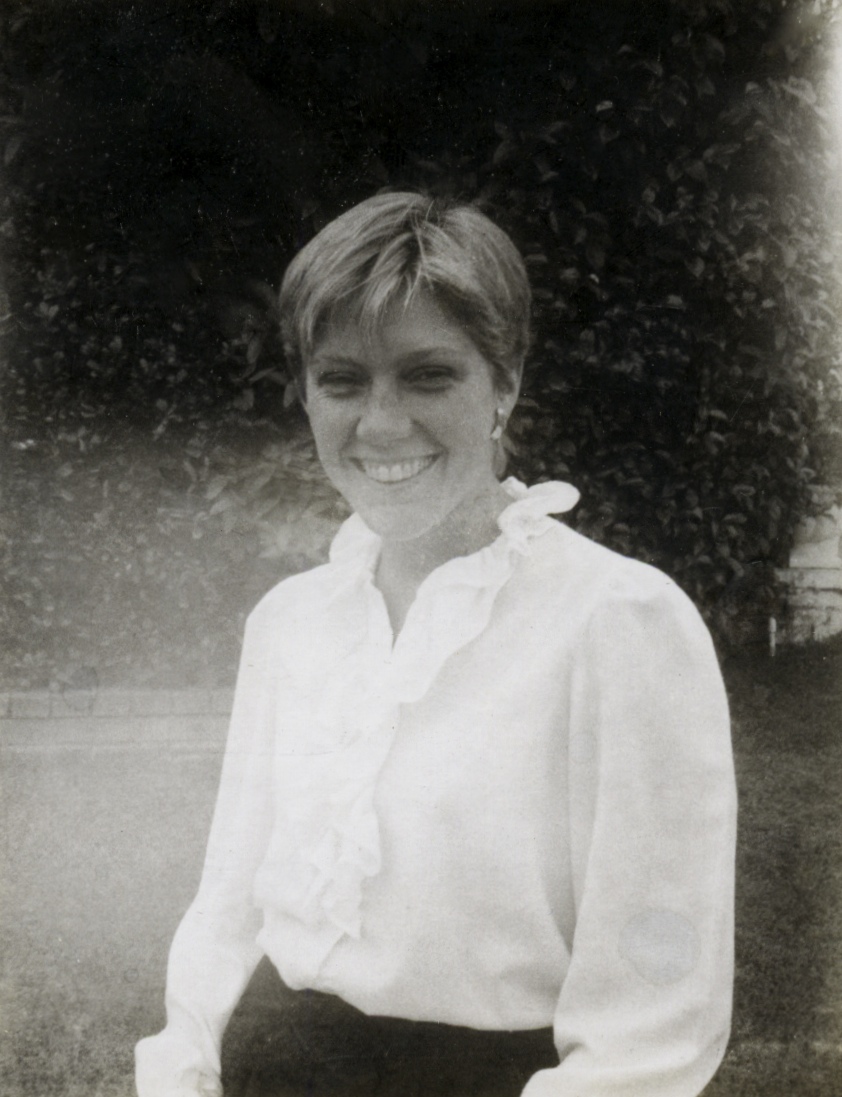
For my picture, I chose a photograph of me when I didn't know how beautiful I was. Do you have one like that too?


Thursday, September 8, 2011

The Art of Haute Couture

I wanted to take a trip up to San Francisco this summer to see the Balenciaga and Spain exhibit at the de Young museum before it closed, but I never did. It was just too hard to find the time to make the trip so instead for about forty dollars I purchased the book by Hamish Bowles that the Fine Arts Museums of San Francisco and Rizzoli's published to commemorate the exhibit.  The book traces the influence of the Spanish masters -- from Zurbaran, Velazquez and Goya to Picasso and Miro -- on Balenciaga's designs.

I am thinking of this tonight because one of the assignments for our mastermind meeting this month is to bring in something that you bought that you considered expensive or unnecessary at the time but are glad you splurged on it.  There was a time when buying a book like that, much less taking a flight just to see an art exhibit, was a hard decision for me - even if it could be considered research for my book.  I didn't have enough confidence in myself or my work to justify the expense.  Or perhaps it was just extremely low self worth.  At the time, I envied other artists who invested in themselves, spent money renting out an office to work in, purchased a proper writing chair to sit in, bought gorgeous picture books that helped to stimulate their creativity.  What was wrong with me that I couldn't do that too?

There was one book that I really wanted called "The Art of Haute Couture" but just couldn't afford.  I saw it at the Barnes and Noble on the Third Street Promenade in Santa Monica while I was enjoying a rare night out with my girlfriends.  It was 1995 and the book cost 75 dollars.  I had just begun to write about Marla Piper and the fabulous red coat that she would sew and the book spoke to me.  It was beautifully photographed by Victor Skrebneski with breathtaking closeups that revealed the way couturiers work with line, texture, drape, volume and ornament to create illusion and drama.  I had to have it, but there was no way to assess how or when or if the purchase would ever pay off.

How do you know that the thing that you are working on will be hugely successful one day?  That's the question that was posed in our mastermind.

Well I did buy the book -- thanks to the urging of my friend, Barbara -- and for my picture tonight, I chose my favorite photograph in it of a design which I realized only tonight is by the very same Balenciaga.  But the reason I chose it is not because it's a Balenciaga.  I chose it because one of my fellow masterminders mentioned that it reminded her of The Red Coat Portal that I had painted last year, perhaps unwittingly after the couturier.  Or perhaps Balenciaga and I both drew our inspiration from the greatest of all masters, mother nature.

Friday, September 2, 2011

Mindful of Thoughts

I know that my subconscious mind reacts according to what I think each day, so I choose these thoughts:

Success.  I was born to succeed.

Plan. I have a definite written purpose and plan that brings me freedom, creativity and happiness.

Time.  Time and money expand to meet my dream.

The Status Quo that I Am Changing.  Women see themselves through the eyes of others and do not recognize their worth.

The Idea That I Am Spreading.  By remembering our women’s arts of friendship, sewing, birthing, rearing, mourning, weaving we reclaim parts of ourselves that bring us closer to one another and to our nature.

The Picture of the Future that I Am Painting.  We honor the natural world.

The Red Coat Promise.  Bestowing certain charms not offered by other fineries.

Faith.  I have faith in all things good and live in joyous expectancy of the best.  Others believe in me because I believe in them and in myself.

Chasms.  Though I may sometimes feel foolish and afraid, I remember that I bear chasms, heavens, eternities within me and can travel unopposed.
Help.  Invisible counselors speak to me through the natural world, which I cultivate by being observant and listening.

Give Thanks.  I am thankful for my life, for the endless possibilities for creation, for wholeness, for joy, for deep meaning and contentment.


Tuesday, August 23, 2011

Do You Need This Hedge?

The company I work for moved offices over the weekend and folks had to jettison a lot of their stuff because we were going to a smaller (more posh?) space in Beverly Hills.  I had a cactus that had grown so tall and skinny and lopsided I had to prop it up against the window sill to keep it from falling over.  There was no way I was taking it with me.

The cactus towered precariously over the two other much smaller cacti in its pot that for some reason had never "progressed" the way it had.  The three of them looked like a sorry lot.  Surely no one else would take them, but I couldn't bring myself to throw them out.  Better let someone else do the dirty work.  So I shined up the pot, affixed a yellow post-it note with the words: "Poor little cacti - orphaned - lost their home" and carried it (very carefully!) into the lunchroom.  I set it on one of the tables, waited to make sure it wouldn't fall over, and then bid it a wistful goodbye.  A few hours later, I went in there to dump some trash and was astonished to find that it was gone!

I was telling this story to one of my colleagues, thinking that somebody must have thrown them out, and he told me, on the contrary, he'd seen the person who took them -- and assured me they'd found a loving home.  I couldn't imagine who would become attached to such an ungainly arrangement and then go through all the trouble of moving it! 

Was it possible that my little note about orphans (we were all feeling a little uprooted that day) may have bestowed a certain charm not offered by other plants?  I recalled one of my favorite posts by marketing guru Seth Godin about how the best brands, the ones that make a connection with the public, are mythic -- that is, they tell stories that people connect with on a spiritual level.

I didn't happen to take a picture of the three cacti before I abandoned them (would you have!), but I do like to take photos of misfit plants, and thought I'd share this photo of one of my favorite hedges in Century City.  It's located across the street from our old office and always made me laugh and wonder what it said about our community. 

Next time, if you're unsure if you've got something worth keeping, ask yourself does it have a mythology that helps you live?